
Protected: The Menopause Research
Visuals Development: Part 1
Before going further I had to create the booklet. I started by using the existing shapes in an A5 booklet but was not happy with the results.
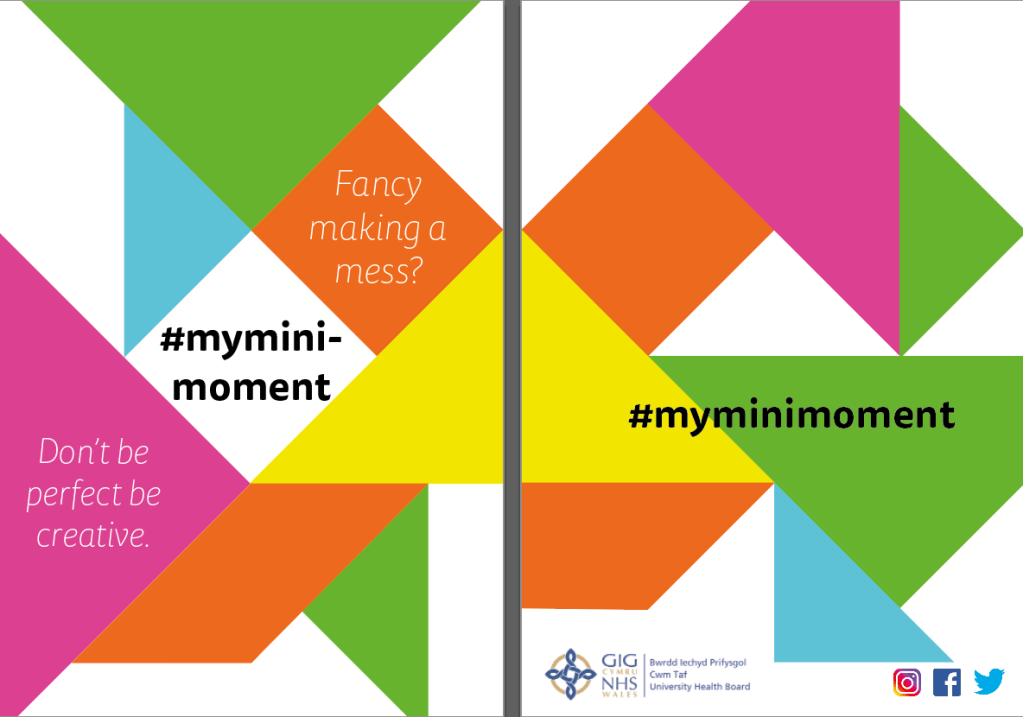
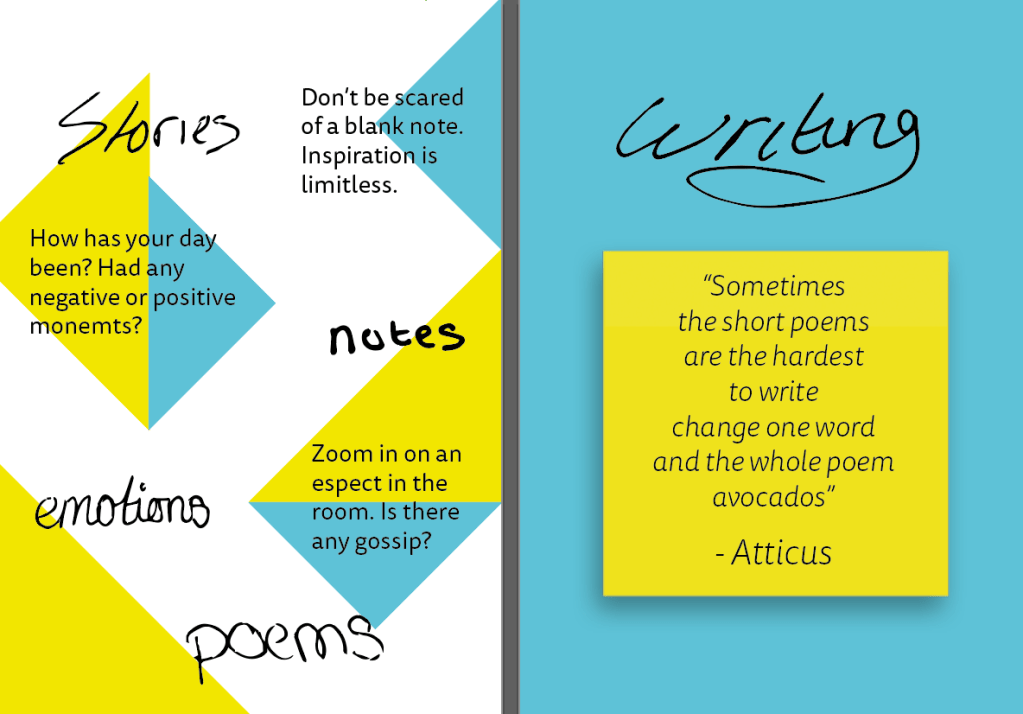
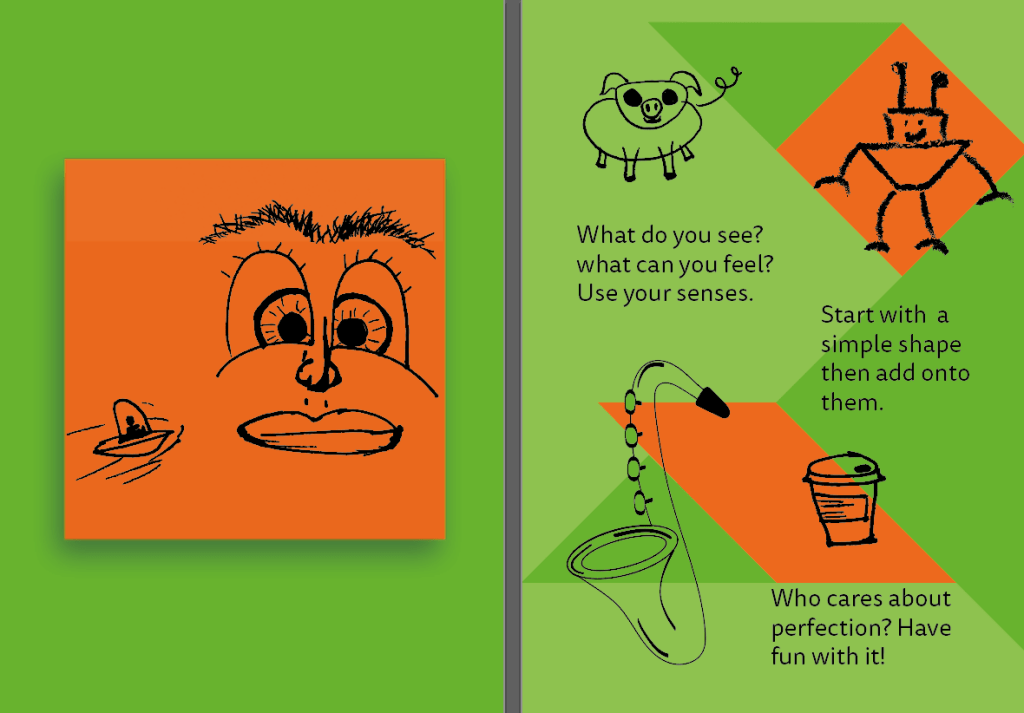
With help of a peer, I decided to go for a 6 page spread with 3 different types of art to show. Written, Drawn and an extra random one, to be called dimensional – being photography or object or something creative.
The written will hold a poem from the month. The drawings show the top 9 drawings. Finally the last one holds information about creativity and why we should be creative.
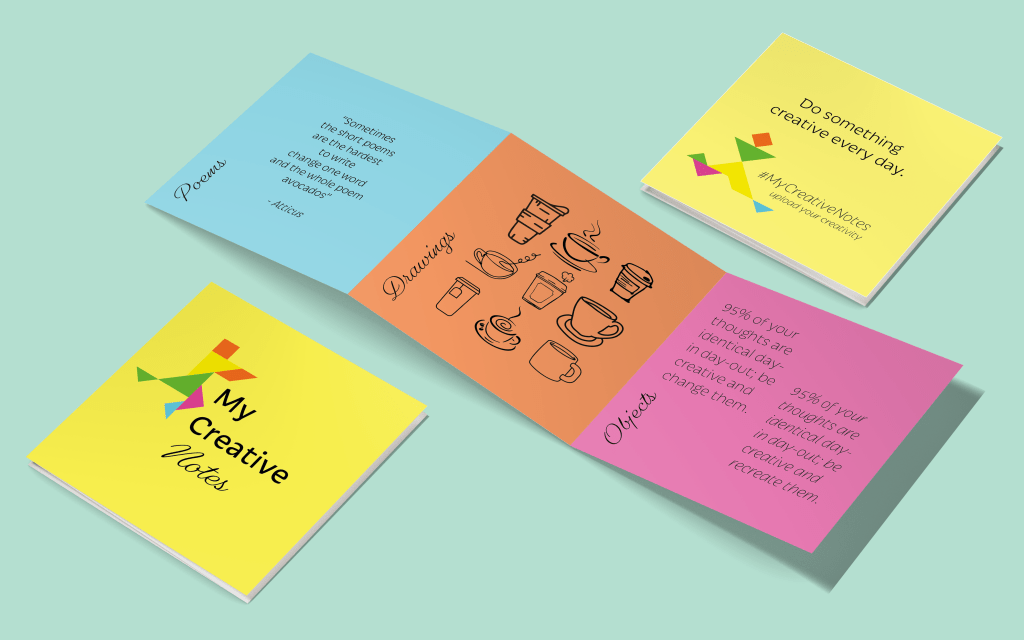

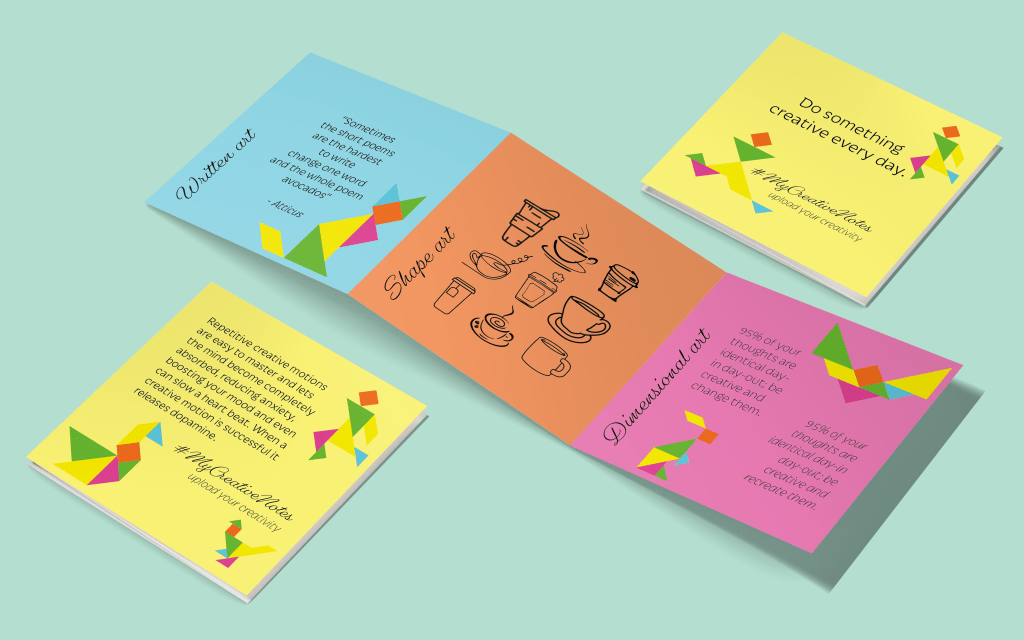
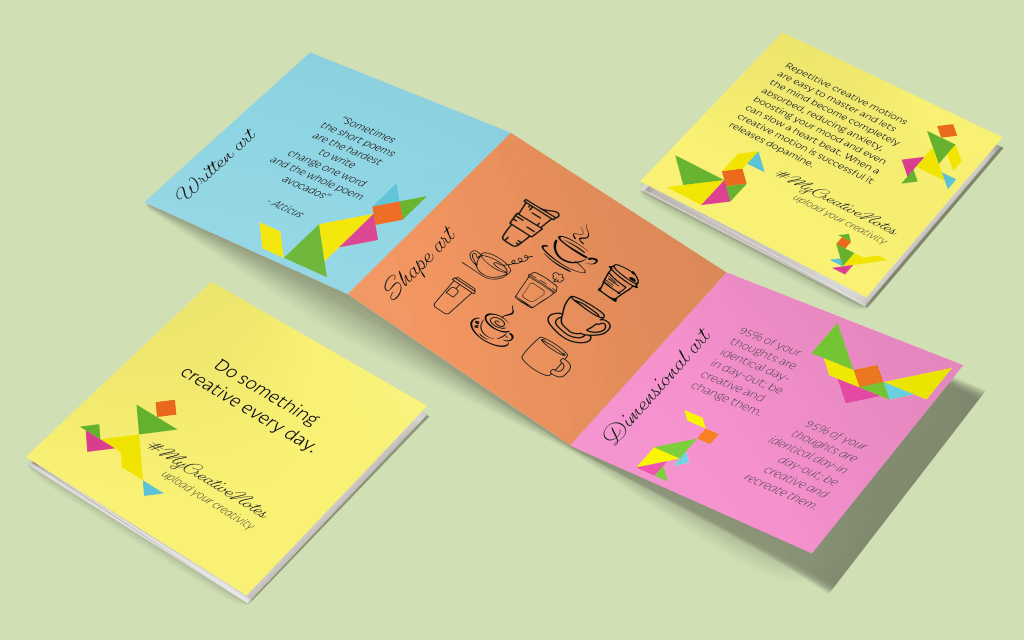
I realised the booklet had no correlation to the board so added the tangrams throughout then decided that it looked over crowded and removed the background for the squares as building blocks to design. I kept the outside the yellow but calmed it down so it resembles the sticky note pack.

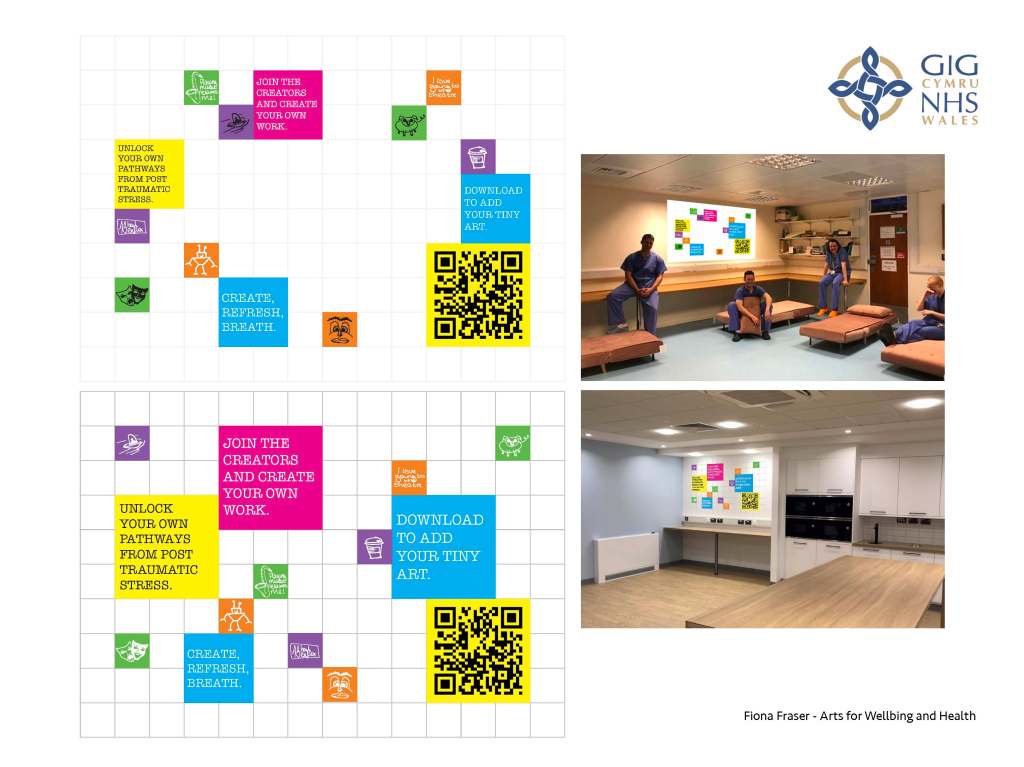
I decided to redo the boards so that they are longer to fit across a wall, not just a corner in the room. They become the main focus.
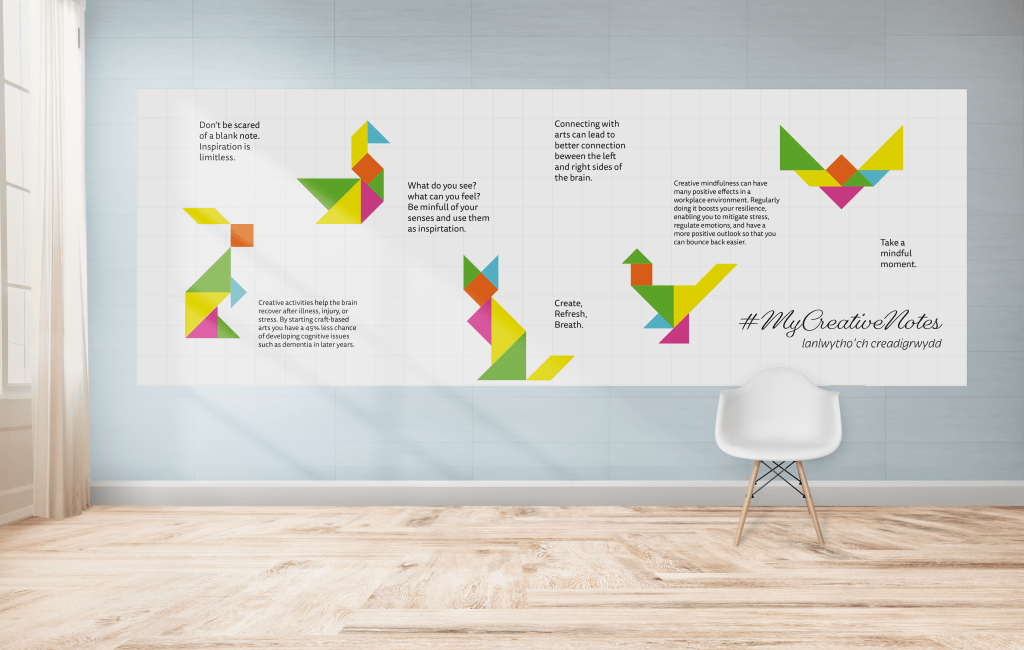

Asking my house mates as they are mostly medical students (the perfect people to ask) they thought my designs wanted them to do origami not to use a pen and sticky note. They loved the way the visuals looked and it has a calming presence as well as an exciting playful side.
Development of my concept
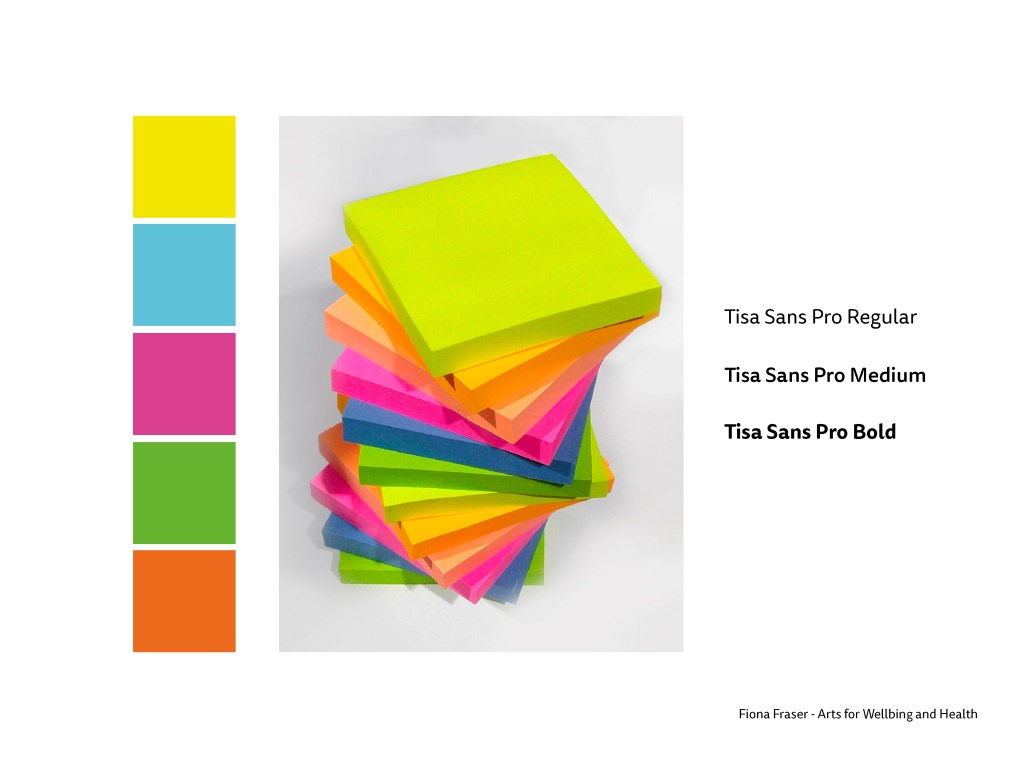
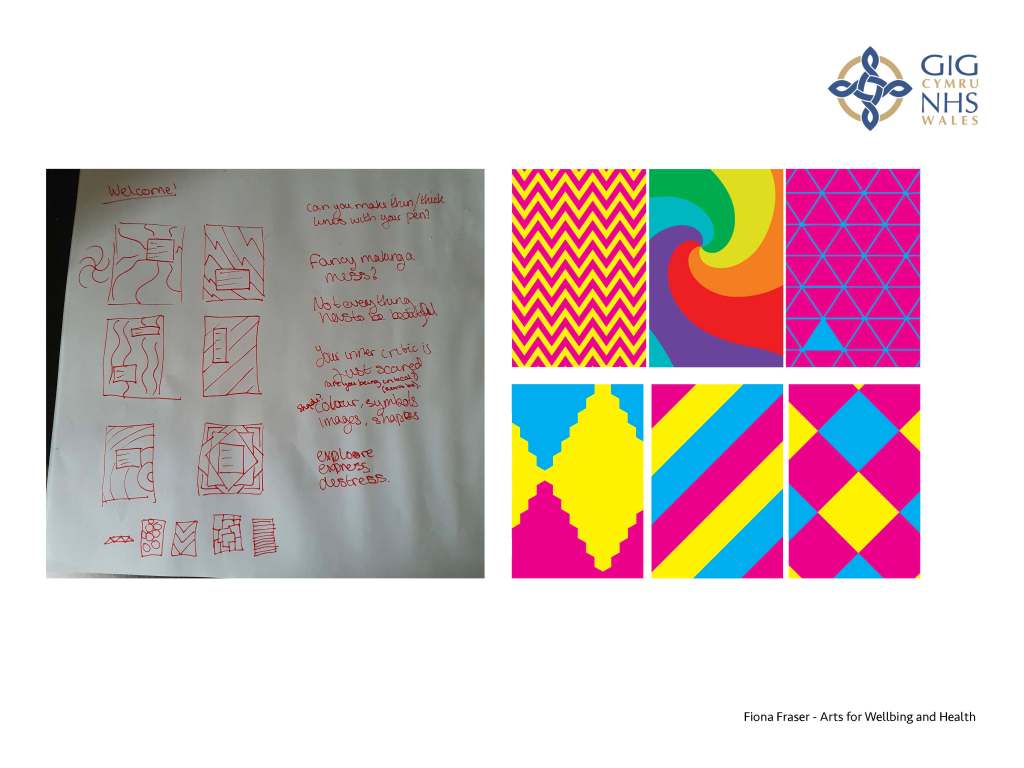
From the tutor feedback, I immediately changed the colours picking 5 colours, still bright but are more realistic with colours of an actual sticky note. I have chosen a more rounded, sans-serif font. I then researched into shape art and the tangrams work so well with this project. I tried to remove the squares in the background so that the design becomes more free flowing but it didn’t look right.
I removed the booklet from the idea as the boards hold the information but decided to keep the social media as the boards cant get to all the NHS buildings.
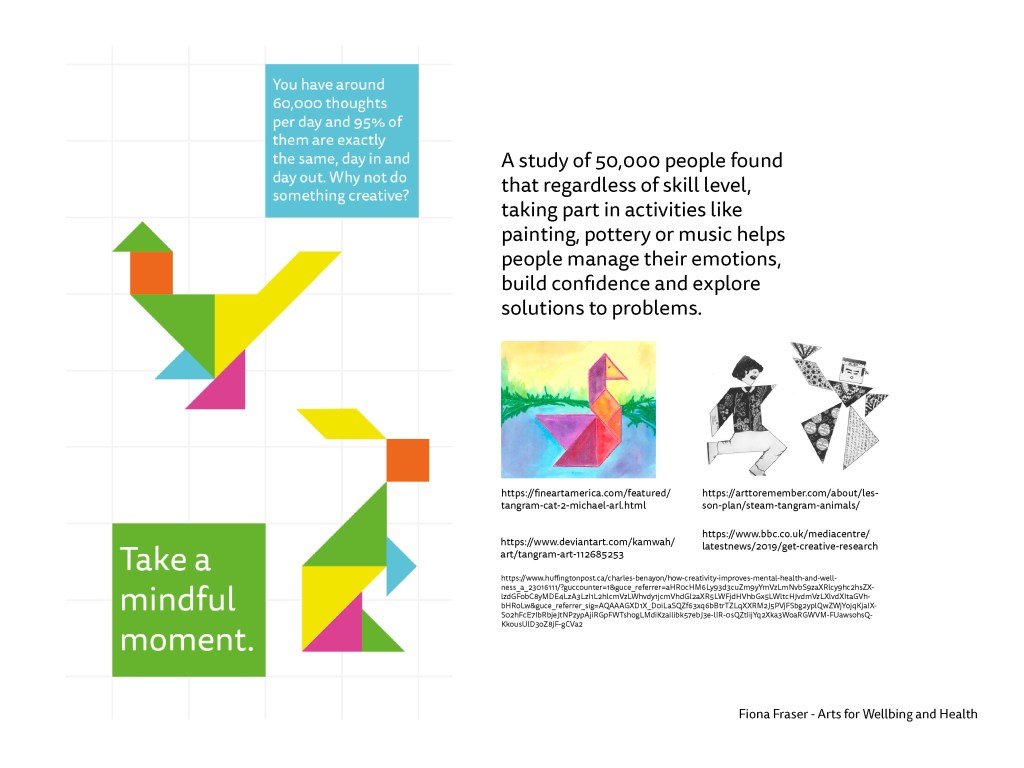
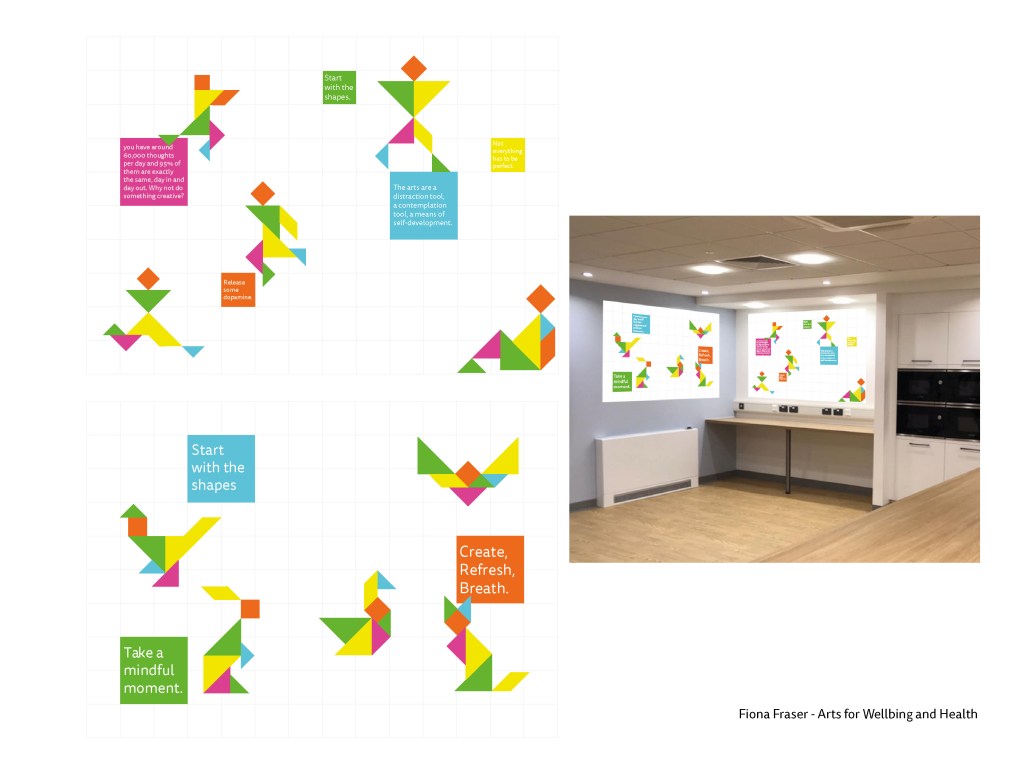
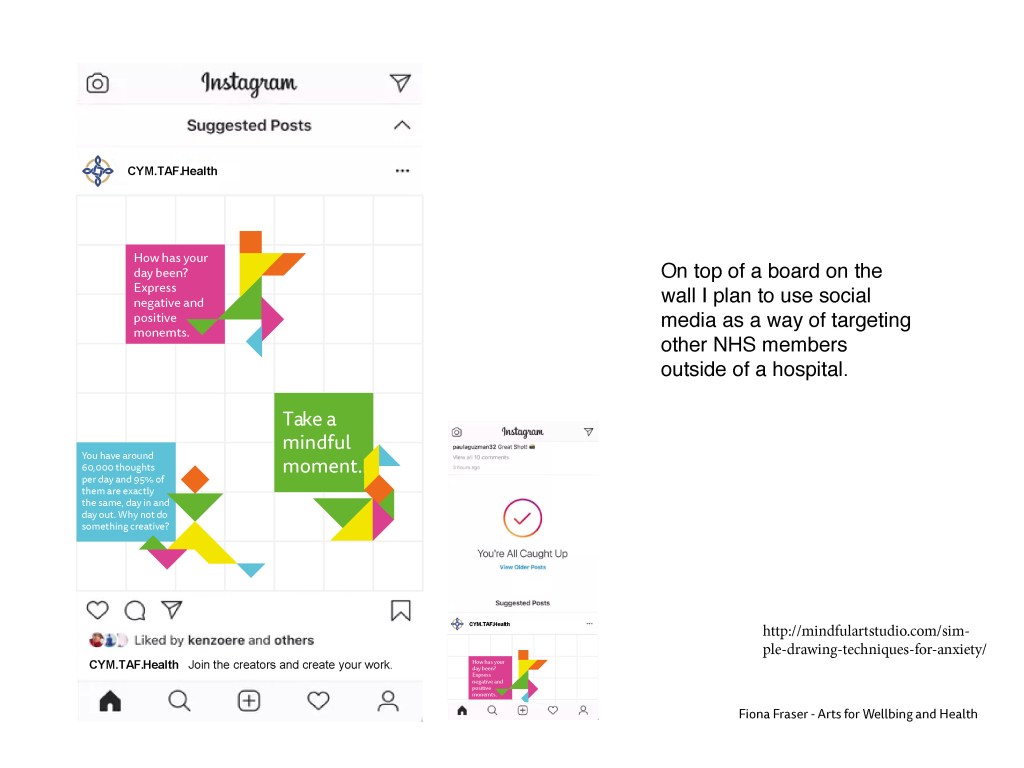
Feedback
The mentor who works in the real world said I need to push it further. Where can this idea go? Is it just writing or drawing and can I add other elements? He said at the moment this is a workshop so how can I make this into a thing that can last? And how do I make the design so it doesn’t just become apart of the furniture?
Actions
I still believe I need to work on the uni brief to “communicate powerful & direct messages that persuade & empower people to transform their views.” To do this I will bring back a better version of the booklet and let that be an inspiration to get creative. While the board shows the benefits and why you should pickup the booklet.
This booklet can be a monthly display of the creative outcomes people add onto the work. They can submit their work via a # on social media.
Mile stone 3 – The visual language
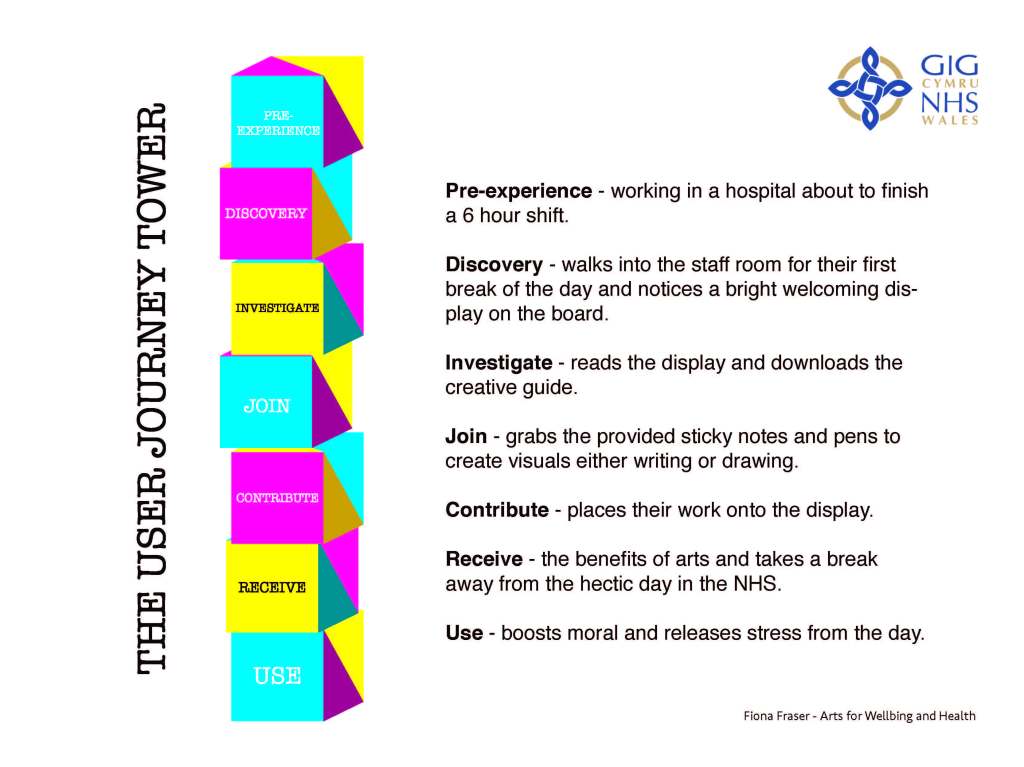
The mentor suggested mapping out how the designs will look for the client on presentation day. They are self explanatory with the brief, my solution, how it can work, visuals. Them being the banner for a wall, the social media, then the booklet. I’m a little stuck with the booklet as I’m not sure on how it’ll work yet.
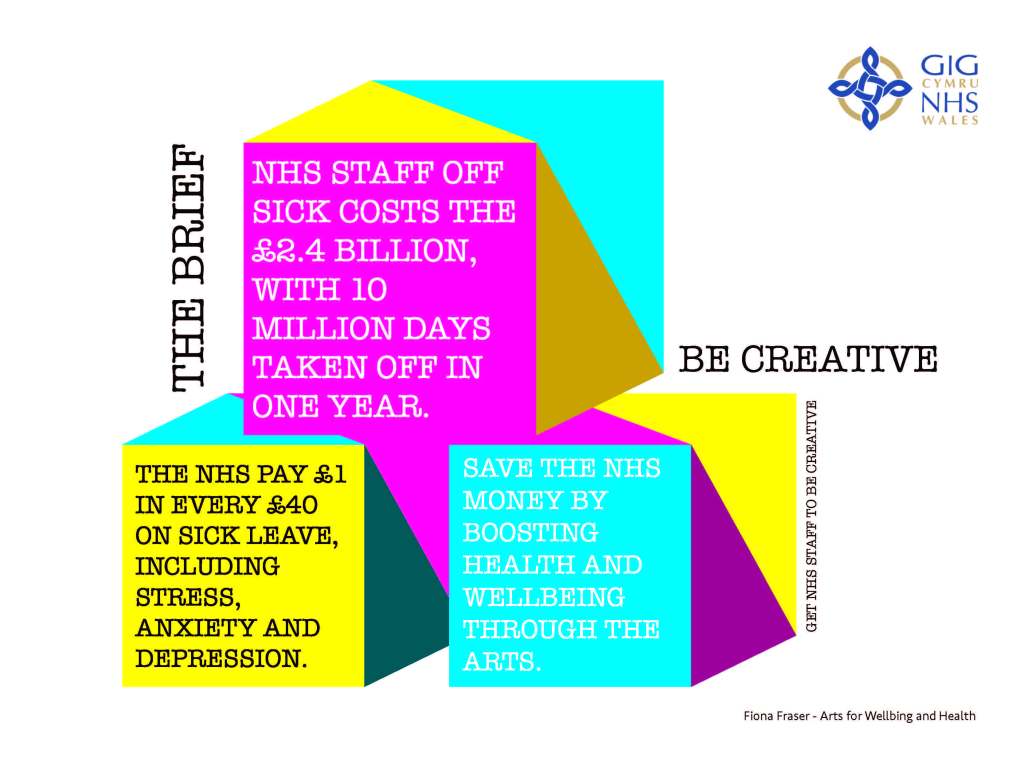

Feedback
The tutor first was not happy with the colours as they just look like the CMYK basic colours, as well as the typeface being all uppercase and slightly aggressive. He suggested looking at tangrams and shape art and use that as inspiration to go further.
He questioned the need for the booklet and why it was there. The board can be enough if I make it so. He also asked why the social media was there and how the project benefitted? This made me realise that although the concept hit the client brief, I was not doing enough for the uni brief – where I have to add science and present information.
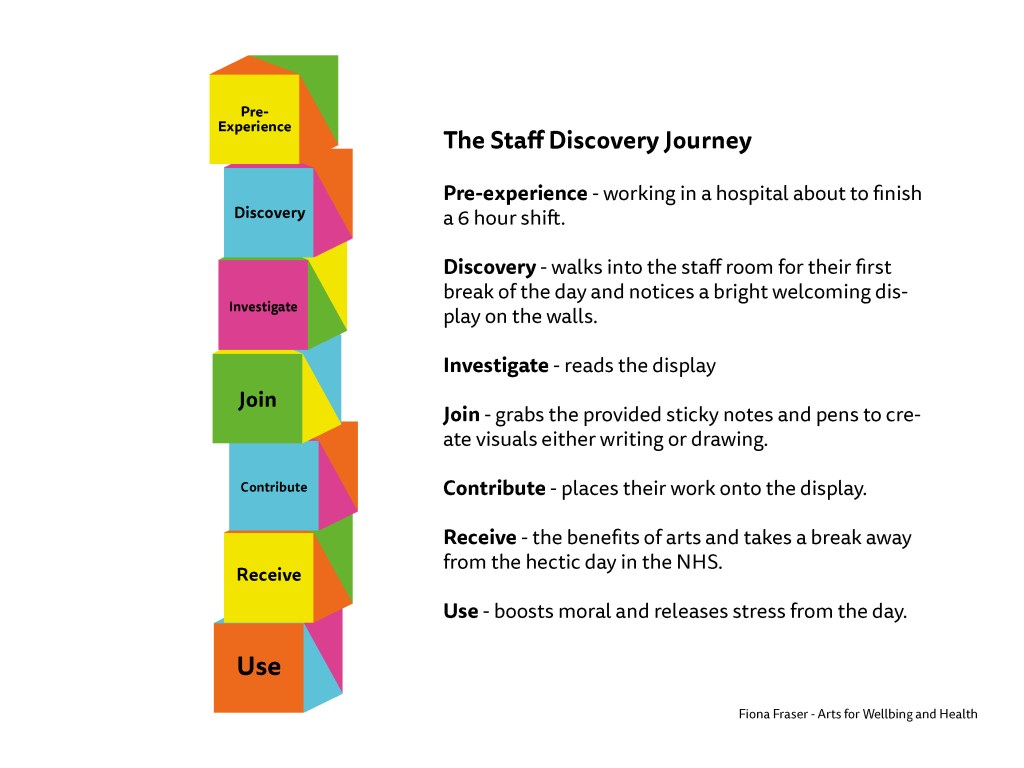
User Journey
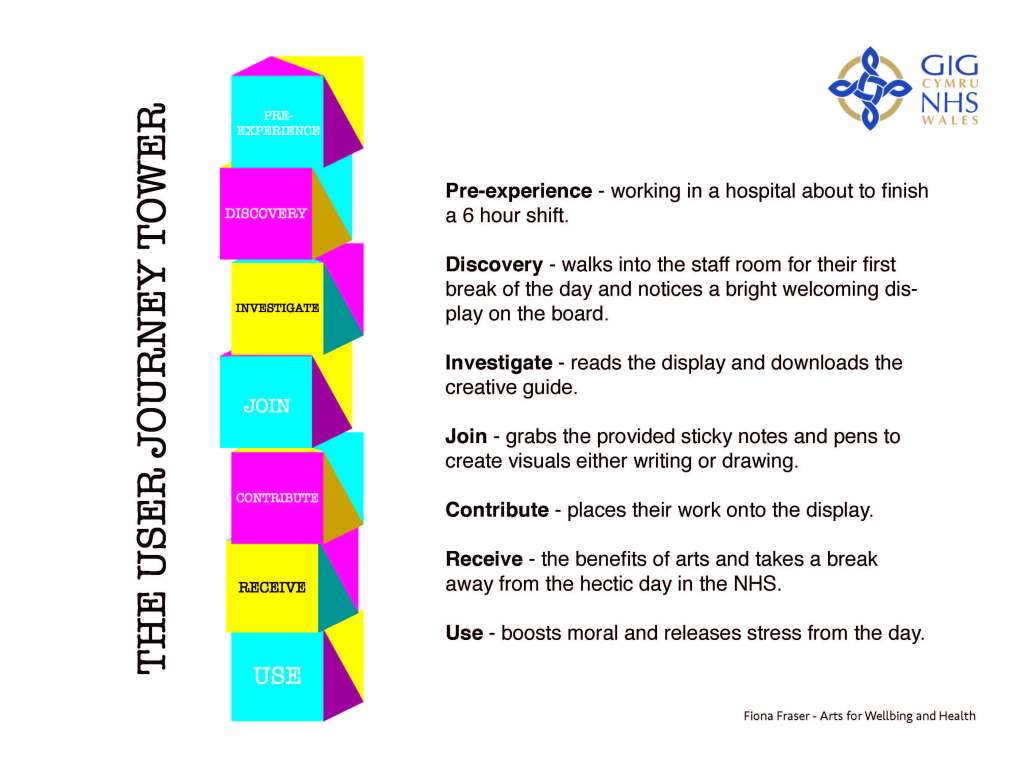
This workshop explained how an idea can work within the real world.
How we go about the design is through research; for instance the 6 frames, the brief’s websites and our personal findings. Then behavioural insight; like the nudges, looking in to the target audience and the client. Finished with mapping, meaning the 3 initial concepts, the main message, the situations.
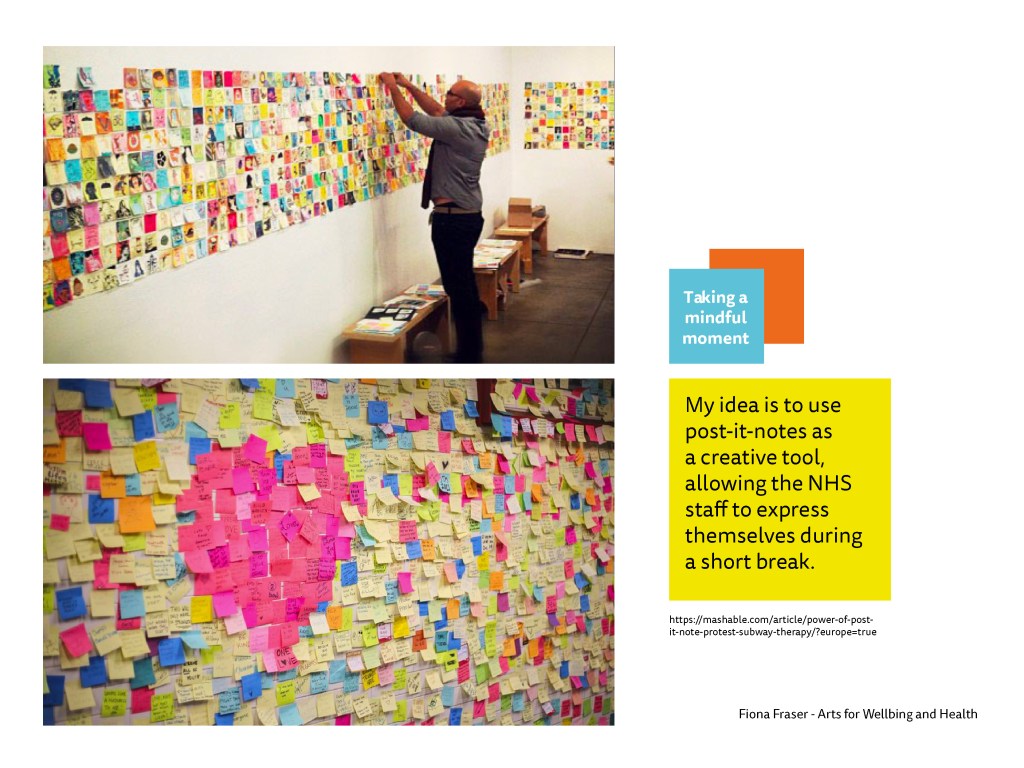
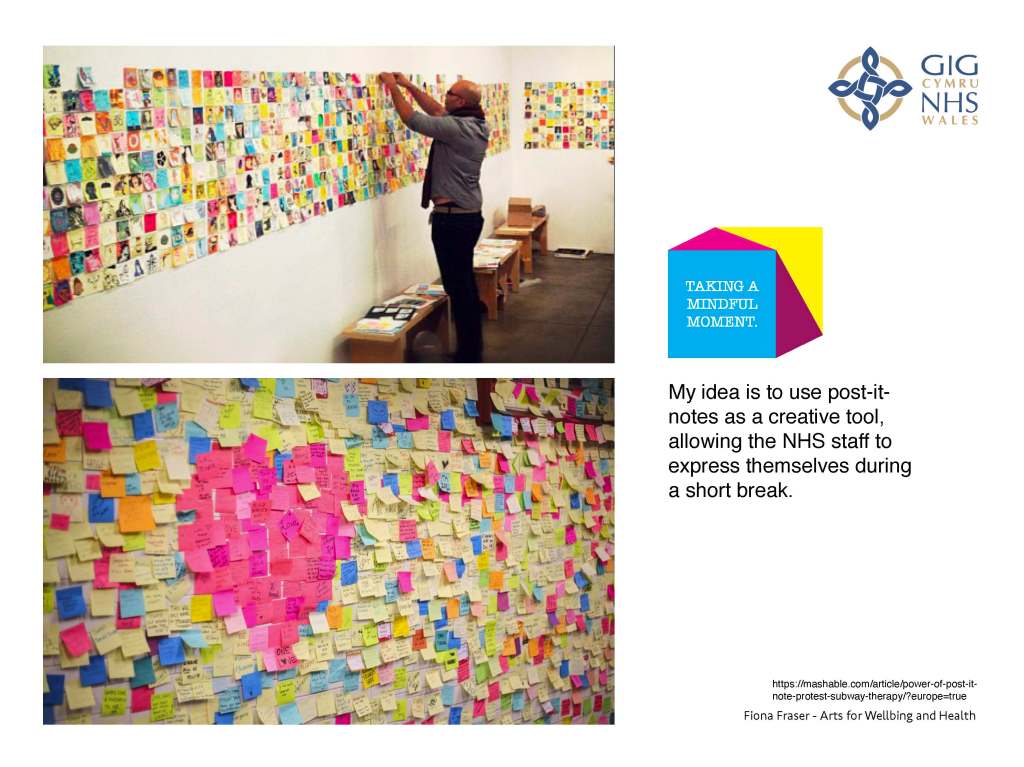
My main message is to show off the health benefits of the arts for the NHS staff by being accepted by the health board. My idea is to use post-it-notes as a creative tool, allowing the NHS staff to express themselves during a short break. My idea can;
- change the way the target audience looks at the arts
- encourage people to engage with the arts
- persuade the NHS staff to continue using the arts for their health benefits
- inform people about the benefits of the arts on a person’s health and wellbeing
I will do this through;
- creating a workbook
- advertisement on social media
- bringing a wall to life with colour and detail
Development on 3 concepts
Client, Tutor & mentor feedback
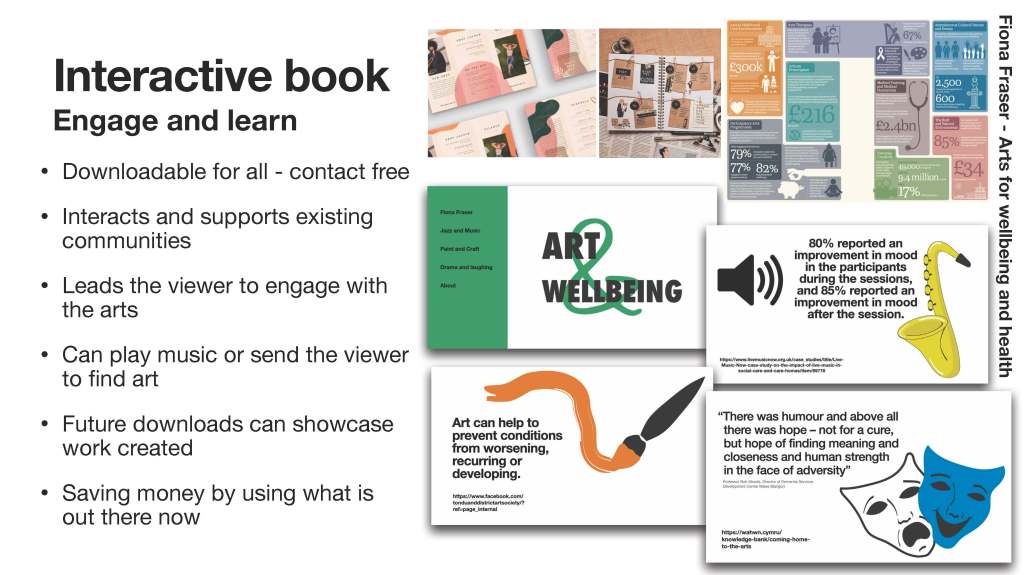
The first idea (interactive book) isn’t too creative so I feel I could push myself and the client to steer away from the basics. However the client liked the idea that it directed people to sources and the charities could get involved as well. The mentor suggested a monthly workbook so each type of art could be worked though creatively and the whole book be finished in 15 mins or spread out over a week then a new one next month.
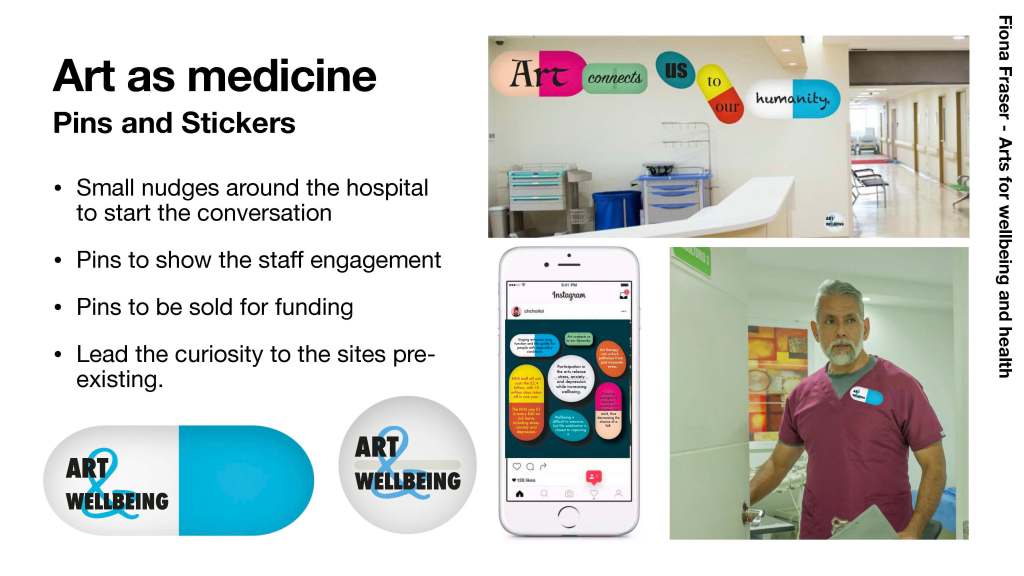
The next idea (art as medicine) was liked but the mentor thought there was no where to go with it. I could do other symbols and the client wanted it changed to arts as a plural to all the arts including music, drama etc. Yes it is sustainable by selling the pins and having social media campaign but how could I challenge myself being in 3rd year for my portfolio?
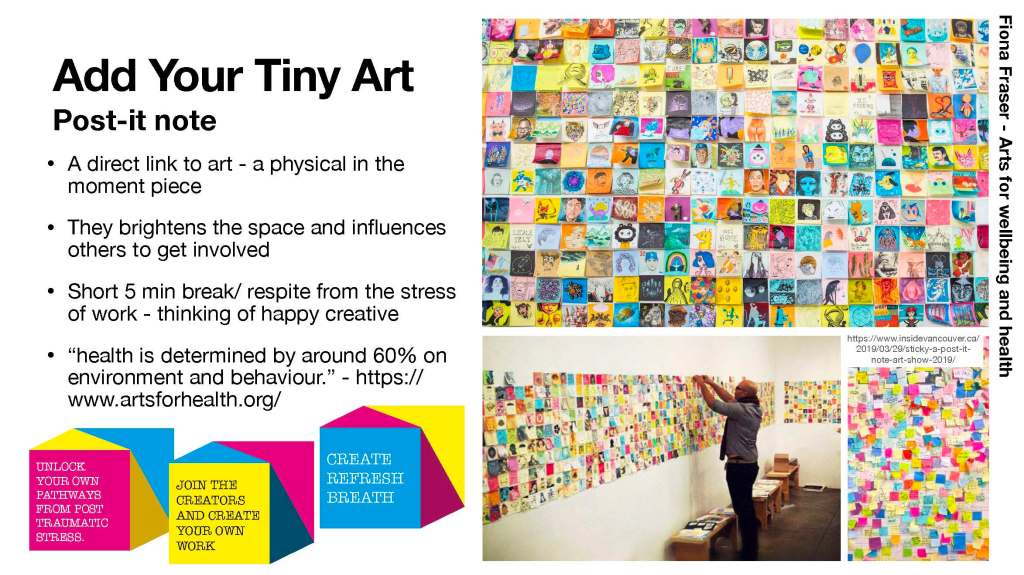
Lastly, the 3rd idea had tones on potential as a concept and just needed a backbone to where and how the idea can be utilised to its full potential. I mentioned the how this couldn’t be too covid friendly as people will have to touch the board with their notes but the client wasn’t to worried about it. She suggested it going into the staff only rooms. The mentor stated not everyone likes to draw so how could I over come that? Also where are they going to find inspiration?
When talking this though with the tutor I decided that I will use the idea of sticky note arts and create a boards for the staff only room with a work booklet for inspiration. So far I like the colour scheme as it is bright which is very different from others and would be welcoming in a hospital environment.
Milestone 2 – three strong concepts
After talking to the client my initial thought is be as creative as possible as she doesn’t know what outcomes she wants. However the most obvious need would be a printed booklet that showcases the benefits in writing and images for the NHS staff and stakeholders. This would not be fun or creative to achieve so I adapted the idea to be on a tablet or phone (covid safe). This can mean the booklet can play music, show videos, or links to existing organisations.
With the nudge workshop, I thought of creating a short and snappy symbol and message that leads to curiosity. Thus the pill of art. This can be easily placed around the hospital with little funding and pins can be worn by staff showing engagement. The social media can hold the information as it is free and already available to use – this is where the science can come in.
This idea is to push the boat on what the client can expect. This is to physically engage people whether being on a board in a hospital room or in a meeting with stakeholders. I need to think more how this idea can be brought to life.
Milestone 1 – Creative Brief
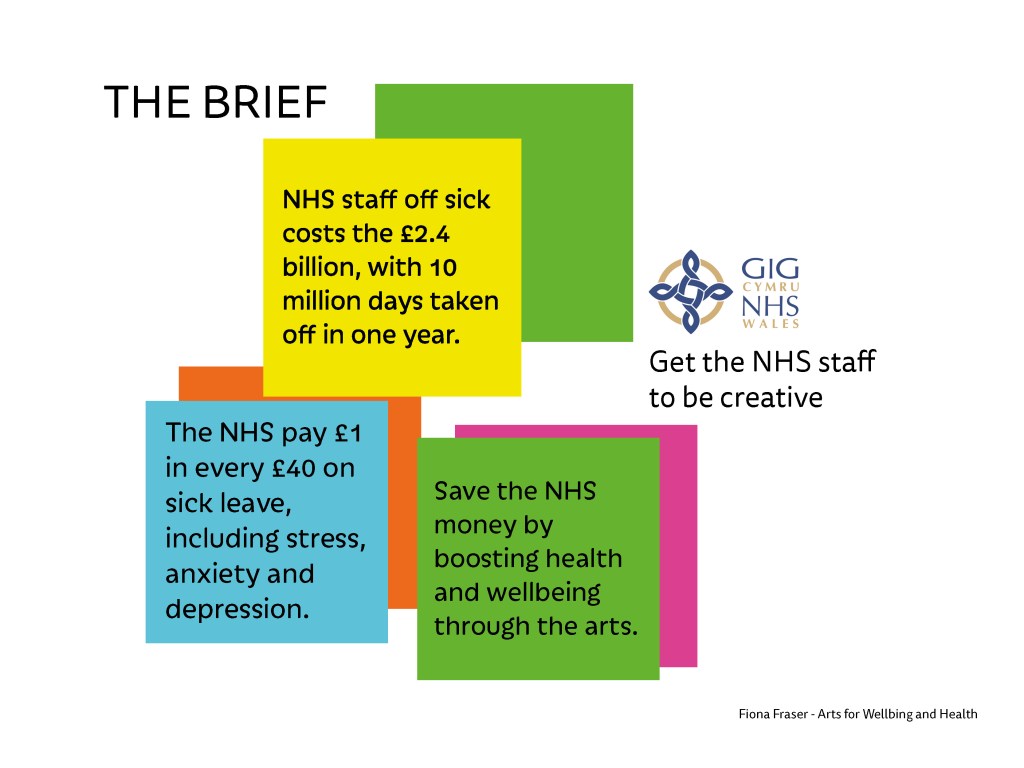
The brief is telling us to show the staff how beneficial art is on health and wellbeing. When speaking to the client I learnt that she had to be approved by the board, therefore we have to produce something for the board that can be useful for the staff and create a campaign that highlights the benefits and shows how the health board can achieve this.
Looking into the NHS wales they have some great messages about wellbeing and have already started their journey into the arts but funding is low and engagement is maxed due to the lack of funding to this enterprise. The client explained in last years report that a jazz band went into the elderly patient word at one local hospital and it was so successful with patients and staff they planed to go again. This shows that music can lift spirits and bring a community together.
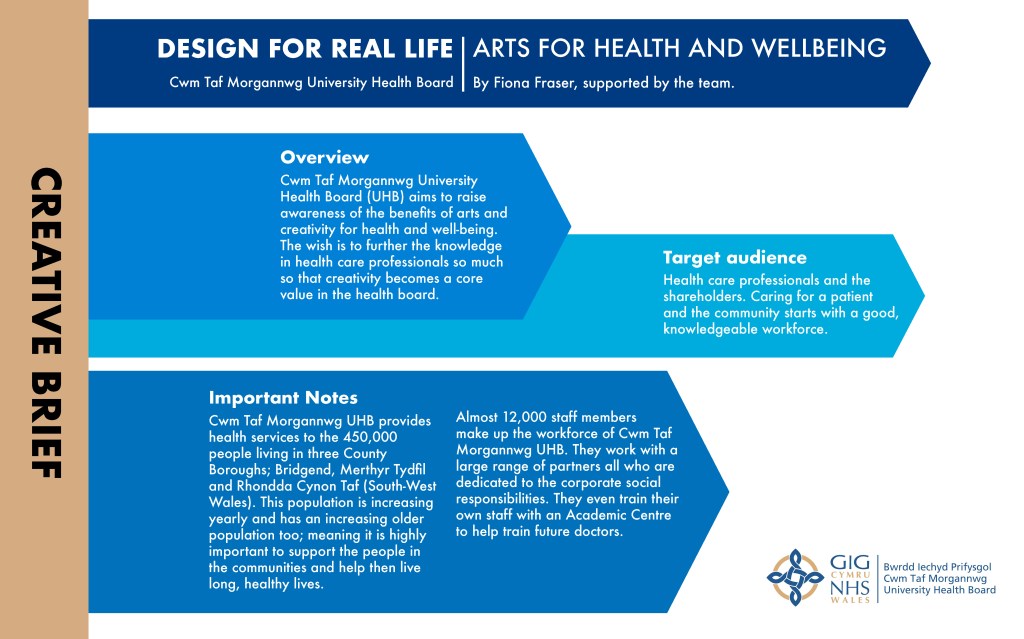
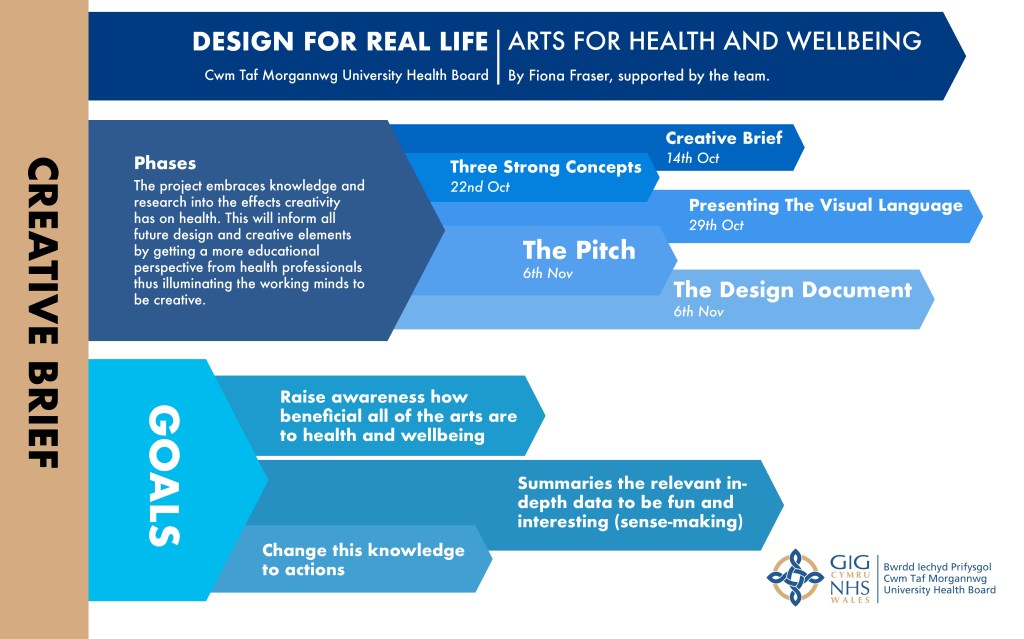
I designed my creative brief with the colours of the NHS Wales logo with each paragraph as arrows into the future to shine a positive light on how with this brief will be positive and fun, yet structured to please the health board.
Talking to the mentor and tutors, I plan to create a video or interactive book instead of a basic powerpoint that the client wants. By creating this the staff and patients can download while waiting at the GP or laying in bed in the hospital to engage with the arts, including music drawing and other such things.
The client has already hired artists to create murals around hospitals but I believe an interactive mural might be better as it could change/ grow through the years. This allows the hospital to take it as their own not just an artist from outside creating one mural that staff could become numb to if they see it everyday.
Nudge and Budge workshop
We already understand that graphic communication uses signals and meaning that influence the viewer. This workshop is to introduce and understand the relationship between these expressions and the real effects that the designs have and their consequential actions. I learnt the 6 styles that interlink explaining the behavioural insights and psychological nudge that factor in the consequential responsibility we as designers have.
The 6 systems are as follows;
- Systems thinking > Fast and Slow – Fast being unconscious, effortless – Slow being rationals and responsive
- Information design > Visual Language – Either textual or imagery, tonal etc.
- Information actions > Cues & Reminders – Triggers of emotions to lead to an action/ responce
- Information actions > Planning – to make simple actions, reducing procrastination
- Framing > Loses and Gains – Social Comparison – Choice and Incentive – Gains and Loses
- MINDSPACE

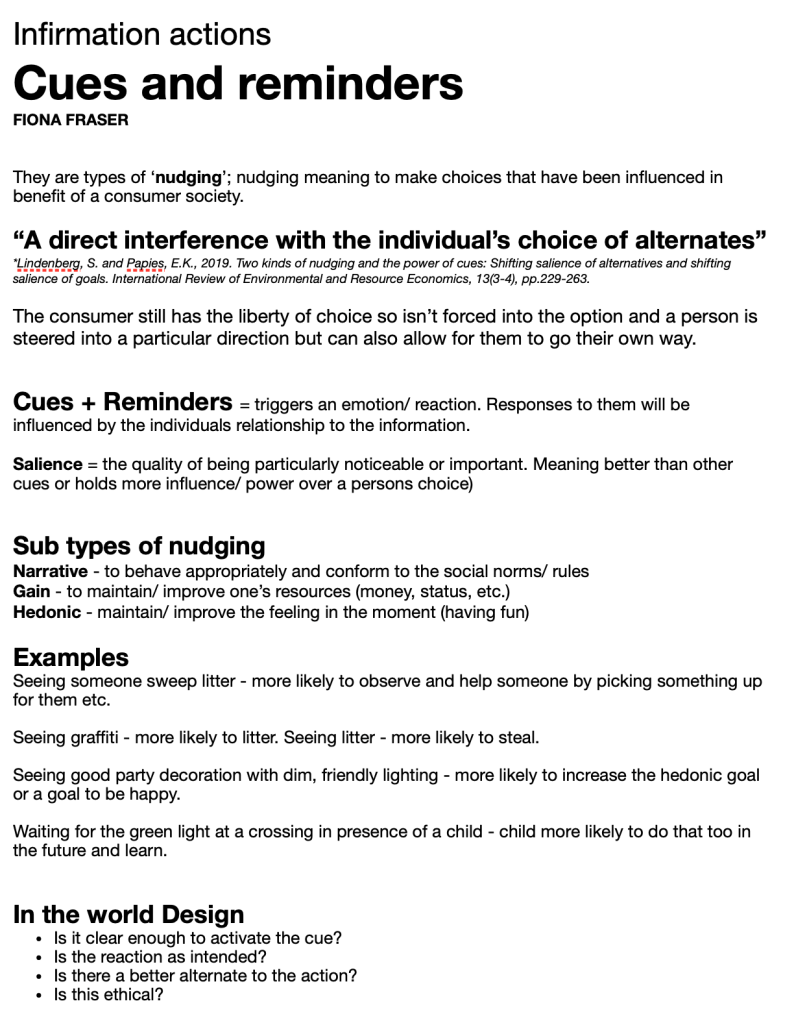
This was beneficial as I am using this thought process within my dissertation to explain the ethics of a single designer when influencing the masses; and how the gain/ hold power over a viewer. Is it ethical to influence a person that would not understand that they are being influenced?
 Fiona Fraser's Graphics